

Understanding the Level 2 Background Check for Healthcare Workers
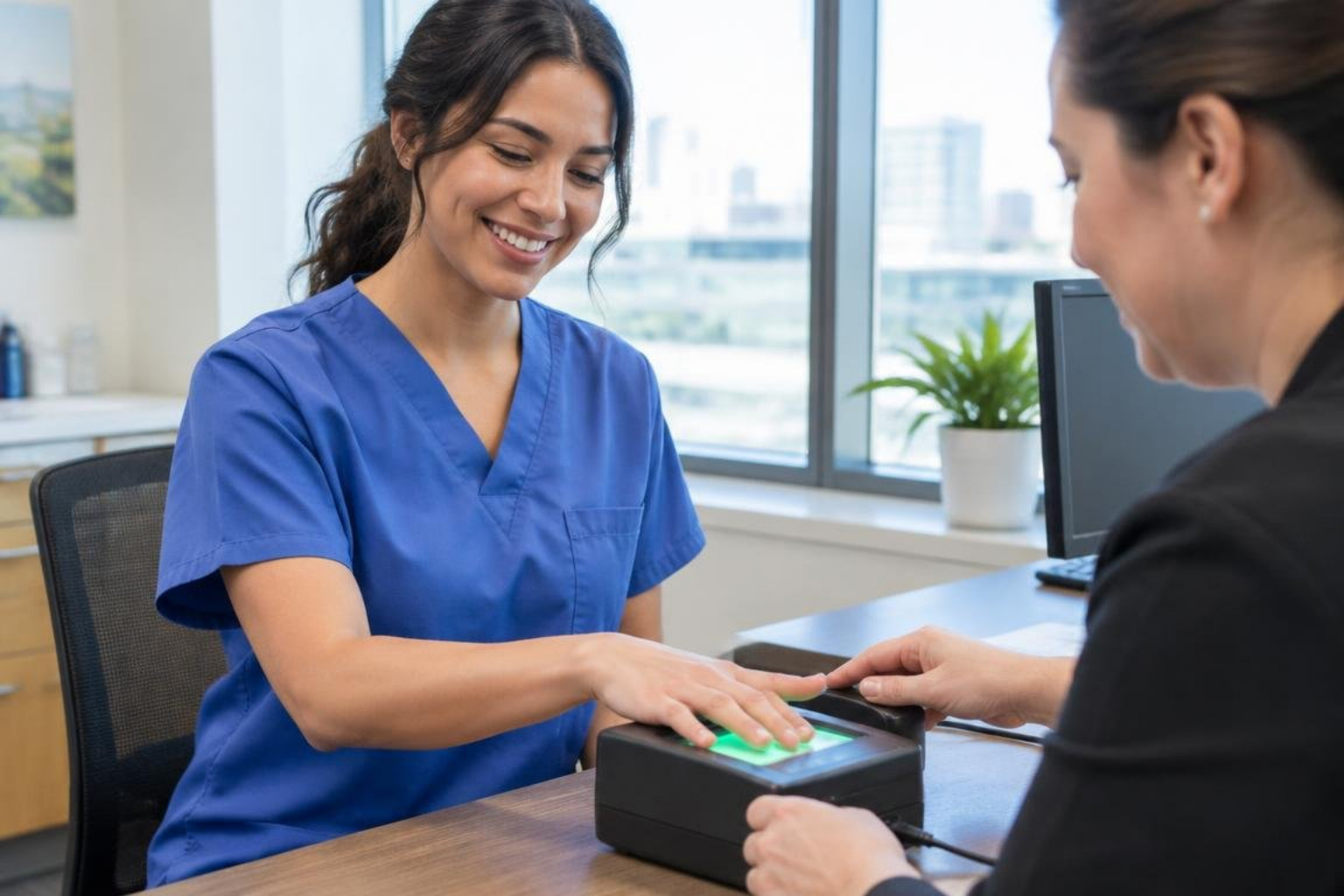
When clinical talent acquisition leaders navigate healthcare hiring in 2026, regulatory vetting demands speed, precision, and absolute compliance. In healthcare, the difference between standard pre-employment vetting and advanced regulatory screening comes down to jurisdiction, biometric identity verification, and access to protected state and federal repositories.
Compliance Checklist: Level 2 Healthcare Screening
Before placing clinical or direct-care staff, verify that your onboarding pipeline satisfies every regulatory checkpoint:
- [ ] Biometric Livescan Capture : Digital fingerprint capture submitted directly to state law enforcement repositories and the FBI CJIS database.
- [ ] FCRA-Compliant Authorizations : Standalone disclosure forms and signed candidate authorization collected prior to screening.
- [ ] Abuse & Registry Searches : Queries completed across state Child Abuse and Neglect (CAN), Adult Protective Services (APS), and the National Sex Offender Public Website (NSOPW).
- [ ] Federal & State Sanctions Verifications : Exclusions screening across HHS-OIG LEIE, SAM.gov, and individual state Medicaid exclusion databases.
- [ ] Professional Licensure & NPDB Audits : Active license validation and National Practitioner Data Bank disciplinary checks.
- [ ] Continuous Monitoring Enrollment : Post-hire arrest notifications (Rap Back) and monthly exclusion rescreening.
| Screening Dimension | Level 1 Background Check | Level 2 Background Check |
|---|---|---|
| Primary Identifier | Name, Date of Birth (DOB), Social Security Number (SSN) | Biometric Fingerprints (Livescan) + Demographics |
| Criminal Search Scope | County-level courts, single-state repositories, standard multi-jurisdictional databases | State Law Enforcement Repositories (e.g., FDLE) + FBI National Criminal Database (CJIS) |
| Abuse & Sex Offender Registries | National Sex Offender Public Website (NSOPW) | State-specific Child Abuse/Neglect (CAN), Adult Protective Services (APS), and NSOPW |
| Sanctions & Exclusions | Basic OIG-LEIE checks | Comprehensive multi-source screening (OIG, SAM.gov, State Medicaid exclusion lists) |
| Target Roles | Non-clinical staff, administrative support, remote non-patient roles | Direct patient care staff, licensed clinicians, personnel handling client funds or medications |
| Statutory Mandate | Facility-discretionary or basic commercial standard | State-mandated (e.g., Florida Chapter 435, Hawaii HRS § 321-15.2) |
What Distinguishes Level 1 from Level 2 Screenings?
Level 1 checks rely primarily on name and demographic data to search local county records and commercially compiled national criminal databases. While useful for general corporate roles, name-based checks have inherent limitations: they can produce false positives for common names or miss records if an applicant uses an alias or unrecorded maiden name.
Understanding the full scope of screening healthcare workers requires recognizing how Level 2 screening eliminates identity ambiguity. Level 2 background screening relies on electronic biometric capture. By matching fingerprints directly against state repositories and the FBI’s Criminal Justice Information Services (CJIS) database, you verify the candidate's complete criminal history across state lines, regardless of what name they provide on an application form.
Key Verification Layers: Criminal Records, Registries, and Abuse Checks
A robust Level 2 workflow extends beyond law enforcement criminal records. Because healthcare professionals work directly with vulnerable populations—including children, the elderly, and individuals with acute medical needs—state statutes mandate several specialized checks:
- State and Federal Fingerprint Repositories : Direct queries run through state agencies and the FBI reveal felony and misdemeanor arrest reports, active warrants, and final court dispositions.
- Abuse and Neglect Registries : Searches through Adult Protective Services (APS) and state Child Abuse and Neglect (CAN) registries identify substantiated findings of non-criminal exploitation or mistreatment.
- National Sex Offender Registries : Multi-tiered checks across the Dru Sjodin National Sex Offender Public Website ensure candidates have no public registry records across any U.S. territory or tribal jurisdiction.
- National Practitioner Data Bank (NPDB) and Licensing Boards : Direct verifications confirm that clinical licenses are active, unrestricted, and free of adverse disciplinary sanctions or medical malpractice settlement flags.
Reviewing statutory requirements across state and federal jurisdictions helps clinical teams implement comprehensive healthcare background checks.
Step-by-Step Workflow for a Level 2 Background Check for Healthcare Workers
Executing Level 2 checks without operational bottlenecks requires a standardized, chronological workflow that balances compliance with rapid candidate turnaround times.
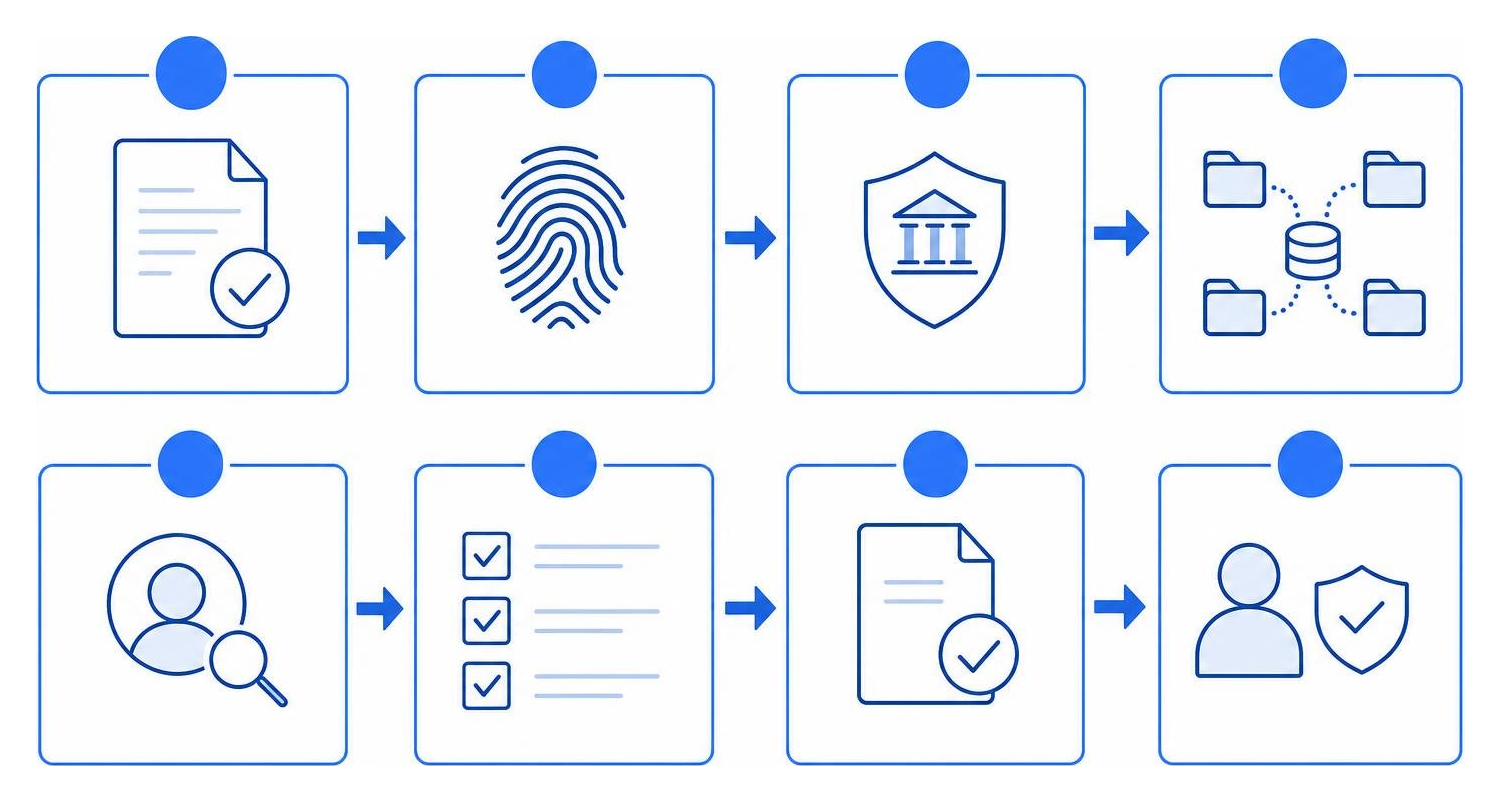
Step 1: FCRA Workflow and Pre-Screening Documentation
Federal and state laws require strict adherence to the Fair Credit Reporting Act (FCRA) and local regulatory disclosure rules before initiating any check.
- Standalone Disclosure & Authorization : Provide the candidate with a clear, standalone document explaining that a background screening will be conducted, and obtain their signed, written authorization.
- State-Specific Attestation Forms : In jurisdictions like Florida, candidates must complete formal affidavits such as AHCA Form 3100-0008 (Attestation of Compliance) or notarized Affidavits of Good Moral Character, certifying they have no disqualifying offenses and agreeing to report any post-hire arrests immediately.
- Identity Verification : Verify primary government-issued identification to confirm candidate details match the electronic screening record prior to scheduling fingerprinting appointments.
Step 2: Biometric Fingerprint Capture and Livescan Routing
Once authorization is secured, the candidate must have their fingerprints taken electronically.
- Livescan Provider Scheduling : The candidate visits an approved Livescan service provider. Rather than ink-and-roll cards, Livescan captures digital images of friction ridge details and transmits them directly to state law enforcement.
- Routing via Agency Clearinghouses : The state agency (such as the Florida Department of Law Enforcement or Hawaii Department of Health designee) processes the prints against state databases and routes them to the FBI.
- Handling Illegible Prints : If an applicant has worn ridges or poor print quality, the FBI may reject the submission. The provider is notified electronically, and the candidate must be scheduled for a free re-scan at the original Livescan location to avoid application closure.
Step 3: Layering Sanctions Screening and Disciplinary Audits
Fingerprint records identify criminal offenses, but they do not capture federal program exclusions or state administrative penalties.
To maintain total compliance, integrate healthcare exclusion lists alongside criminal checks. This includes checking the HHS Office of Inspector General (OIG) List of Excluded Individuals/Entities (LEIE), the System for Award Management (SAM.gov), and individual state Medicaid exclusion databases. Employing automated healthcare sanctions monitoring ensures your organization avoids hiring individuals barred from federally funded healthcare programs.
Regulatory Mandates, Disqualifications, and Rescreening Policies
Healthcare screening operates under strict statutory standards designed to protect public safety. Non-compliance exposes healthcare facilities to severe regulatory penalties, license revocation, and civil monetary penalties starting at a statutory base of $10,000 per item or service, adjusted annually for inflation.
Disqualifying Offenses, Exemption Processes, and Adverse Action
Statutory frameworks like Florida Chapter 435 establish mandatory disqualifying offenses that prevent healthcare workers from working in direct-care roles. Disqualifying offenses typically include:
- Felony drug offenses and controlled substance trafficking
- Violent crimes, including assault, battery, domestic violence, and manslaughter
- Offenses against vulnerable populations, such as child or elder abuse, neglect, and exploitation
- Financial crimes including Medicaid/Medicare fraud, identity theft, forgery, and grand larceny
The Exemption Process
Candidates with disqualifying records may, in certain states, apply for an administrative Exemption from Disqualification (e.g., AHCA Form 3110-0019 in Florida). The candidate must provide clear and convincing evidence of rehabilitation, which may include proof of completed court sentences, payment of restitution, character references, and an unblemished post-offense record. Regulatory agencies will not evaluate exemptions for active probation, open warrants, or non-waivable violent offenses.
Complying with FCRA Adverse Action
The Fair Credit Reporting Act governs how employers must handle adverse employment decisions based on background screening results. If criminal or sanction findings prompt your team to consider denying employment, you must follow the statutory adverse action sequence:
- Pre-Adverse Action Notice : Send the candidate a formal notice, a copy of their completed background report, and "A Summary of Your Rights Under the Fair Credit Reporting Act." Provide a reasonable window (typically five business days) for the candidate to review and dispute any record inaccuracies.
- Final Adverse Action Notice : If no dispute is submitted or the disqualifying findings stand, issue the final notice formally documenting the employment decision.
Good vs. Bad Screening Practices
| Operational Area | Good Screening Practice | Bad Screening Practice |
|---|---|---|
| Identity Verification | Electronic biometric Livescan with direct FBI/state clearinghouse integration | Sole reliance on name/SSN database checks for direct patient-care staff |
| Exclusion Audits | Continuous, automated monthly queries across OIG-LEIE, SAM.gov, and state Medicaid lists | One-time pre-hire search without ongoing post-placement monitoring |
| FCRA Compliance | Automated digital delivery of Pre-Adverse and Final Adverse notices with mandatory dispute windows | Informal verbal rejections or denying employment before sending report copies |
| Break-in-Service Tracking | Automated HR tracking of 90-day gaps to trigger re-fingerprinting before patient assignment | Allowing returning staff to work without verifying clearinghouse status validity |
Common Mistakes in Healthcare Screening Programs
- Conflating Commercial Criminal Databases with Biometric Checks : Assuming private vendor criminal checks satisfy state Level 2 statutory mandates.
- Overlooking State-Level Exclusion Lists : Searching only federal OIG-LEIE while neglecting individual state Medicaid sanction registries.
- Failing to Manage Break-in-Service Rules : Overlooking employment lapses exceeding 90 days, which legally invalidates a candidate's clearinghouse clearance.
- Inconsistent Adverse Action Timelines : Taking adverse hiring action before providing candidates their statutory pre-adverse notice and reasonable time to respond.
Maintaining Compliance: Rescreening and Retention Rules
- Five-Year Renewal Cycles : State statutes generally require all covered personnel to undergo a full Level 2 rescreening at least once every five years to retain their direct-care clearance.
- The 90-Day Break-in-Service Rule : If an employee leaves a healthcare role requiring Level 2 screening and remains unemployed by another participating health facility for more than 90 days, their clearinghouse clearance lapses. They must complete a full Level 2 screening before resuming patient-facing duties.
- Continuous Monitoring via Retained Prints : Many state clearinghouses leverage the FBI’s national retained print arrest notification (Rap Back) program, alerting employers to post-hire arrests. For non-criminal administrative sanctions, relying on point-in-time checks leaves dangerous gaps that ongoing medical sanctions monitoring resolves.
Frequently Asked Questions About Level 2 Healthcare Screenings
How long does a Level 2 background screening take to complete?
Most digital Level 2 background checks are processed within 24 to 72 hours following the biometric Livescan appointment. However, timelines can extend to 10 to 14 business days if the candidate’s fingerprints return an illegible result requiring a re-scan, or if an unindexed court disposition from an older arrest record requires manual retrieval by a county court clerk.
What specific offenses lead to mandatory disqualification?
Mandatory disqualifications vary by state statute but uniformly target violent crimes, sexual misconduct, patient abuse, and healthcare fraud. In most regulatory frameworks, any felony conviction involving bodily harm, sexual battery, abuse of an elderly or disabled adult, Medicaid fraud, or narcotics trafficking leads to automatic statutory disqualification unless a state agency grants a formal exemption.
What is the 90-day break in service rule?
The 90-day break-in-service rule states that if a healthcare worker experiences a gap in covered healthcare employment exceeding 90 calendar days, their previous Level 2 clearinghouse clearance becomes inactive. To re-enter a clinical or patient-facing role, the individual must submit fresh electronic fingerprints and complete a new Level 2 background check.
Build a Seamless, Audit-Ready Screening Workflow
Managing Level 2 background screening does not have to result in delayed start dates or administrative confusion. By integrating biometric fingerprint capture, state registry lookups, and federal exclusion verifications into a centralized, mobile-friendly workflow, your organization can accelerate hiring while upholding compliance standards.
Comparing Level 2 Screening Platforms
| Capability / Feature | Vetty | Checkr | Sterling | HireRight |
|---|---|---|---|---|
| Platform Architecture | Unified all-in-one hiring acceleration platform | Developer-oriented screening platform | Legacy enterprise background tool | Legacy global screening provider |
| Biometric & Livescan Management | Automated scheduling & clearinghouse tracking | Partner network routing | Third-party vendor integration | Third-party partner scheduling |
| Mobile Experience | Mobile-friendly, candidate self-serve flow | Mobile-friendly web portal | Mixed portal experience | Variable mobile interface |
| Setup & Configuration | Self-serve setup with no-code customization | API and dashboard setup | Managed enterprise configuration | Custom enterprise onboarding |
| Real-Time Visibility & Audits | Real-time status tracking & continuous monitoring | Real-time status dashboard | Standard status reporting | Periodic batch updates |
| Certifications | PBSA Accredited & SOC 2 Certified | PBSA Accredited & SOC 2 Certified | PBSA Accredited | PBSA Accredited |
| Pricing Model | Transparent pricing with flexible volume scaling | Usage-based pricing tiers | Custom contracted pricing | Custom enterprise quotes |
Vetty delivers an all-in-one platform engineered to streamline clinical recruitment from initial consent to long-term compliance. With self-serve setup, transparent pricing, real-time visibility, no-code customization, and PBSA and SOC 2 certified protections, the mobile-friendly platform eliminates onboarding friction:
- VettyVerify™ : Deploy fast, compliant background screening and multi-jurisdictional registry searches in two clicks.
- VettyOnboard™ : Automate document collection, state attestation forms, and compliant I-9 workflows.
- VettyComply™ : Maintain continuous, automated monitoring across criminal databases and federal OIG/SAM exclusion lists.
To modernize your clinical onboarding and build an audit-ready workforce, schedule a demo with Vetty today. You can get started directly with Vetty to build a fast, fully compliant screening pipeline.